EES Border Queues Reach Five Hours, Putting $45.4 Billion at Risk
EES queues have reached five hours at some Schengen borders. Tourism bodies cite up to $45.4 billion at risk and explain who must register and how.
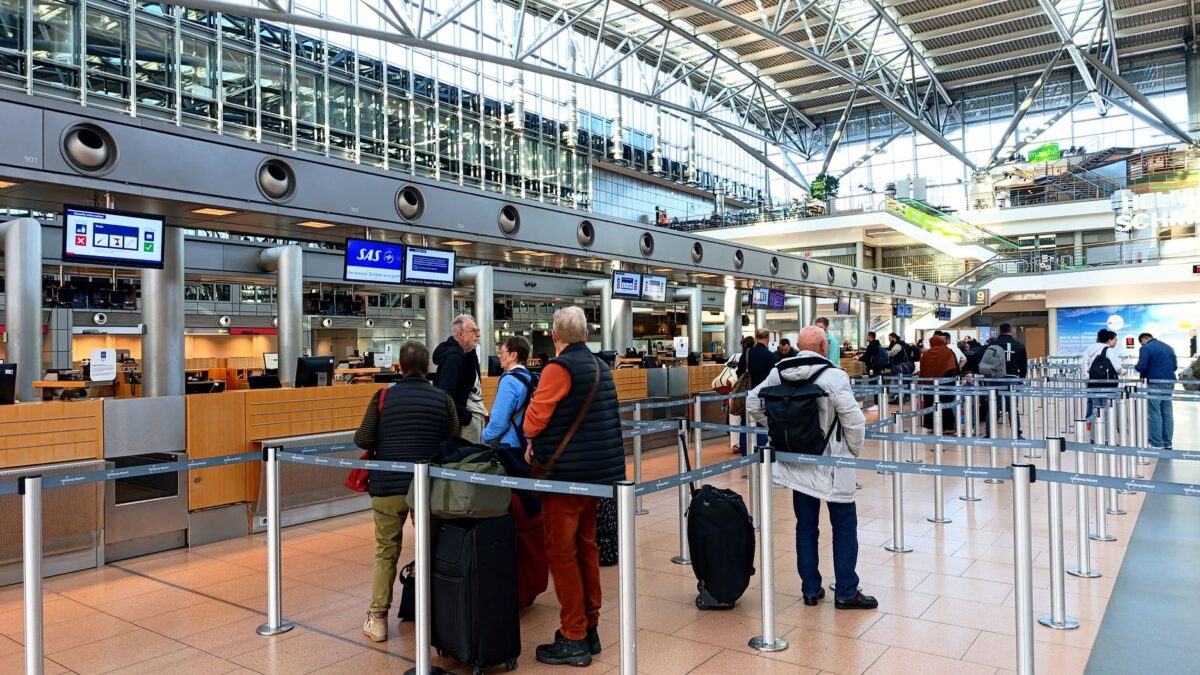
Immigration waits under the Schengen Entry/Exit System (EES) have reached five hours, according to Travel And Tour World, and stricter biometric enforcement is expected from January 2027. Modelling by the World Travel & Tourism Council (WTTC), cited by Airports Council International Europe (ACI EUROPE), says persistent border friction could put up to 41 million international arrivals and $45.4 billion in visitor spending at risk.
Those figures are conditional projections, not confirmed losses or cancellations. Travelers flying into Europe this winter may face long waits at the first Schengen border they cross.
Emergency powers have expired
Transitional powers under Regulation (EU) 2025/1534 let national authorities temporarily pause biometric collection when terminals became badly congested. Those powers expired in September 2026. The European Tourism Manifesto, an alliance of more than 80 public and private organisations, is now asking EU leaders to restore them. It points to staffing shortages, IT glitches and a limited number of automated gates.
No real-time data ranks which airports have the longest waits. ACI EUROPE earlier flagged Spain, France, Italy, Portugal, Greece, Germany and Iceland for problems during the rollout.
Destinations with the most at stake
- Spain: 80.5 million international tourists from January to September. UK residents (16.16 million) and US residents (3.89 million) make up roughly a quarter of arrivals, per INE.
- Portugal: 66 million overnight stays and €24.3 billion in receipts from January to September. The government deployed more than 360 extra police as airports handle about 20,000 more passengers a day than in 2025.
- Greece: 34.23 million travelers and €21.96 billion in receipts. Athens International Airport advises arriving at least 2.5 hours early.
- France: €49.4 billion in international receipts from January to July.
- Italy: €8.1 billion in August visitor spending.
Eurostat data show Spain, Italy and Greece together took 52.6% of the EU’s 425.4 million international accommodation nights in the second quarter of 2026.
What travelers say in the WTTC survey
WTTC surveyed 2,512 travelers in the UK, US, Canada and Australia. Some 65% support EES once informed, and 87% accept minor disruption for smoother future travel. If queues reached three hours or more, 39% of British respondents said they would be much less likely to visit the Schengen Area. The share was 33% among Americans and Canadians and 27% among Australians.
The European Commission defends EES as a security measure. Early eu-LISA data for the first quarter of 2026 recorded 19,985 refusals of entry, 11,885 stay extensions and 665 revoked authorizations.
What it means for travelers this winter
EES has been fully operational since April 10, 2026, covers 29 European countries (not Ireland, Cyprus or the UK) and is free. Visa-exempt visitors register four fingerprints and a facial image. Short-stay Schengen visa holders give only a facial image, because their fingerprints are already in the Visa Information System. Children under 12 are exempt from fingerprinting.
The check happens once, at the first external Schengen border. On a London to Paris to Rome trip, that means Paris, so tight connections there carry risk. Travelers going to France via Dover, Folkestone or London St Pancras complete EES formalities before leaving Britain.
Sweden and Portugal support the free, optional EU Travel to Europe app, which allows pre-registration up to 72 hours before travel. Some travelers may also want to allow extra time for airport transfers, hotel check-in and cruise embarkation.
EES is not ETIAS
ETIAS is a separate system and is not yet operational. It will apply to 30 European countries and carry a planned €20 fee, with exemptions. The source says nearly half of surveyed travelers do not fully understand the new rules, which makes unofficial fee-charging websites a risk. EES registration is free.
For background, see the guide to what EES changes at Schengen borders. Confirm current requirements with the official EU and national border authority websites before you travel.
Source: Travel And Tour World